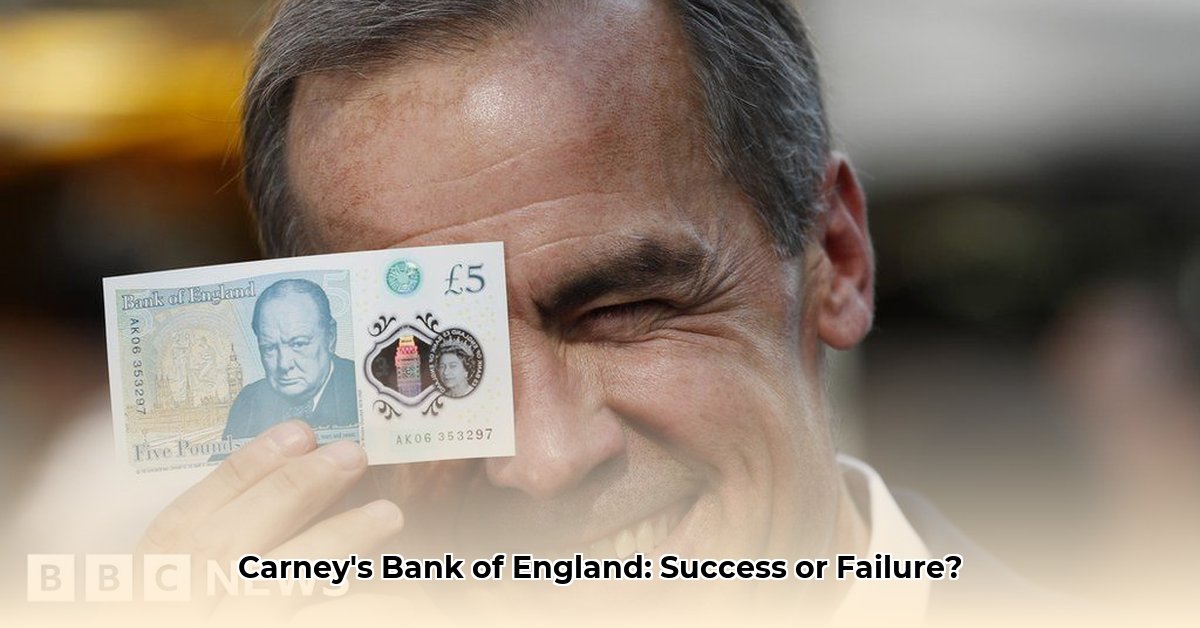
Mark Carney's governorship of the Bank of England (2013-2020) coincided with a period of unprecedented economic and political turbulence. His legacy is a complex tapestry woven from both lauded policy innovations and significant controversies, demanding a critical assessment to understand its lasting impact on monetary policy and central banking communication. For more on Carney's career, see his biography.
Forward Guidance: A Calculated Risk?
Carney championed "forward guidance," aiming to improve communication transparency and market predictability regarding future interest rate changes. The intention was to smooth economic transitions by managing expectations. While proponents applauded the increased transparency, critics argued the strategy lacked clarity and ultimately proved ineffective, leading to the infamous "unreliable boyfriend" analogy characterizing public perception. Did this innovative approach fulfill its promise? The evidence remains inconclusive, highlighting the inherent challenges in communicating complex economic projections to diverse audiences. Studies continue to analyze its effectiveness, leaving a lingering question about its overall success.
Quantitative Easing: Life Raft or Long-Term Liability?
Carney’s tenure also saw extensive use of quantitative easing (QE) – the creation of new money to purchase assets and stimulate economic activity. This proved vital during crises like the Brexit referendum and the COVID-19 pandemic, arguably preventing more substantial economic downturns. However, the long-term effects of such large-scale monetary intervention remain a subject of intense debate. Concerns persist regarding potential inflationary pressures and the overall efficiency of this powerful tool. Ongoing research examines the long-term consequences globally, shaping ongoing discussions on optimal monetary policy responses.
Navigating the Political Tightrope: Brexit and Beyond
Carney's outspoken warnings about the economic risks of Brexit sparked intense political debate. Critics accused him of exceeding his authority and jeopardizing the Bank of England's political neutrality. This highlights the inherent tension between a central bank's mandate for economic stability and its role in informing public discourse on vital economic issues. The questions remain: Did Carney's actions maintain the Bank's impartiality? Did the benefits of transparency outweigh the risks to its perceived independence? His experience offers a crucial case study on this ongoing debate.
A Climate Change Pioneer?
Carney's proactive stance on integrating climate change risk into central banking was groundbreaking. He championed the recognition of climate-related financial risks, urging the financial sector to address them proactively. While this visionary approach is widely praised, the debate centers on how central banks can effectively incorporate environmental factors into their core mandates without overstepping their boundaries. His innovative pursuit continues to be built upon and elaborated by others, highlighting the lasting impact of his forward-thinking approach.
Communication: Transparency's Triumph and Tribulations
Carney prioritized increased transparency, enhancing communication through more regular meetings and information sharing. Yet, his communication style drew criticism for occasional inconsistencies and lack of clarity. This underscores the ongoing challenge central banks face in effectively communicating complex economic issues to both expert and general audiences. The balance between accessible explanation and precise technical detail remains a key area for improvement for future central bankers. How effectively can central banks communicate complex realities while maintaining public trust?
The Verdict: A Legacy Under Scrutiny
Carney's legacy is complex and multifaceted. His innovations in monetary policy and commitment to transparency represent significant achievements. However, controversies surrounding his communication style and interactions with the political sphere must be acknowledged. His tenure provides invaluable lessons for future central bankers, highlighting the need for calibrated communication, effective political navigation, and adaptability in the face of economic uncertainty. His time at the BoE will continue to be dissected and debated by economists and policymakers, shaping best practices for years to come.
Actionable Intelligence: Key Takeaways for Future Central Bankers
- Communication Calibration: Central banks must prioritize clear, accessible communication, balancing technical precision with public understanding (efficacy: ongoing research needed but significant improvements in public understanding are evident).
- Political Neutrality: Maintaining political independence while effectively conveying crucial economic information requires a delicate balance (efficacy: ongoing research is needed, but the inherent risk to central bank independence remains).
- Climate Risk Integration: Effectively integrating environmental factors into monetary policy is crucial, requiring further development of methods and frameworks (efficacy: developing, with significant ongoing investment needed).
This review offers a balanced assessment of Mark Carney’s impactful governorship, highlighting both his successes and areas demanding careful consideration. His legacy, however, will continue to evolve as further research refines our understanding of the long-term effects of his policies and the related debates.